Showing posts with label Places in China. Show all posts

Sunday, March 11, 2007

Carp pool at Heilongtan, Kunming

We went to Heilongtan, a beautifully calm Daoist temple in the outskirts of Kunming. One thing they had was a carp pool. This in itself is barely worth mention - every tourist site in China worth its salt has a large pool of carp, and a sleeping person who will sell you a modestly sized bag of special fish food for a kuai or two. Anyway, there were loads here, and they were all very greedy fish. We decided to empty a whole bag into the pool, far away from where everyone else was feeding the fish, and film the results! Like chickens, fish are attracted to others who are eating, and seem to be able to detect it from quite far away - just look at the video!

Monday, December 11, 2006

Li Fu Jie

Geoff and Sara have put up an excellent post about the little (it's 1km long, but very narrow!) street we live on - Li Fu Jie. Laetitia's also put up a Lifu Jie photo album.

Monday, December 04, 2006

Sea of Bamboo

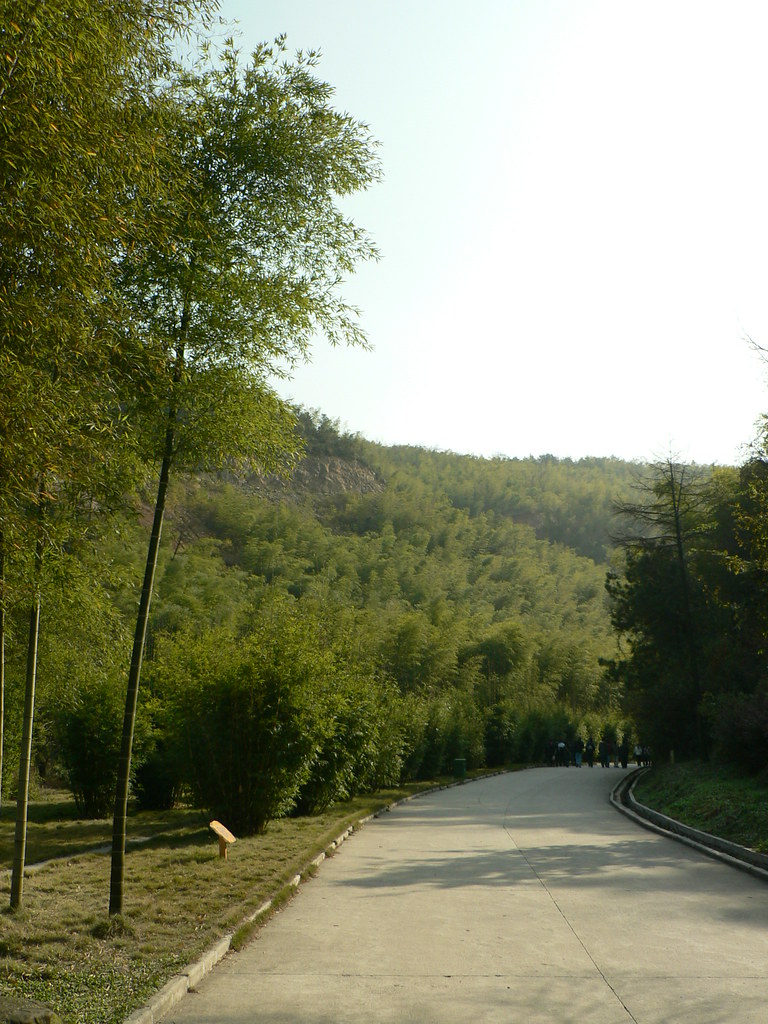
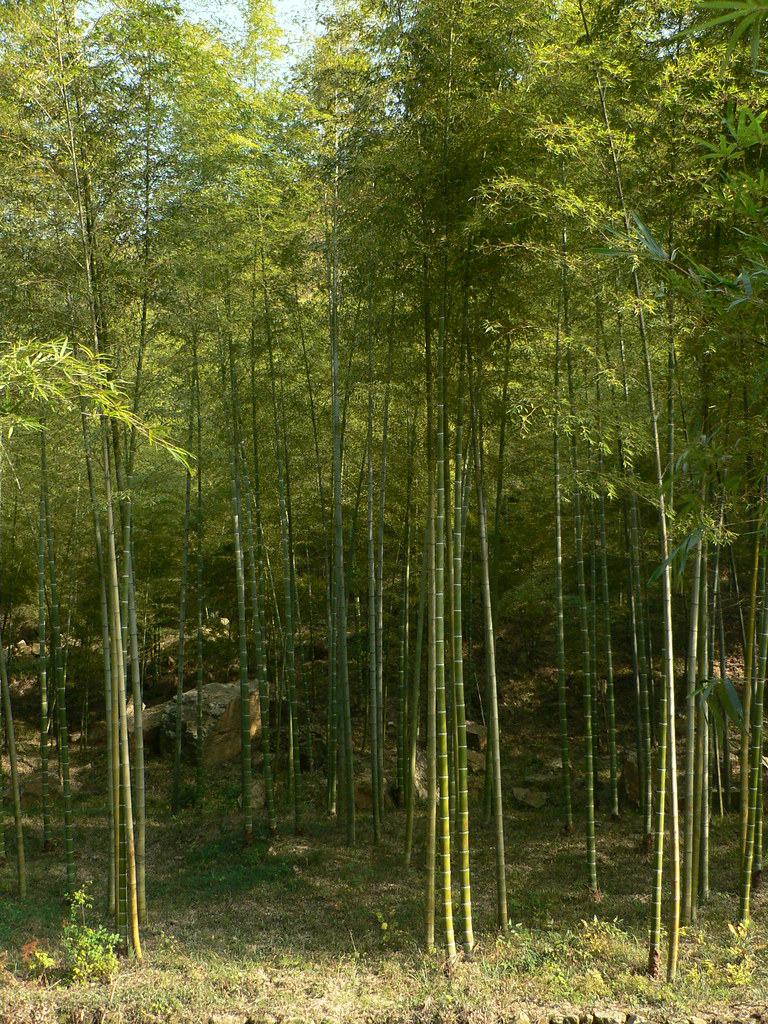
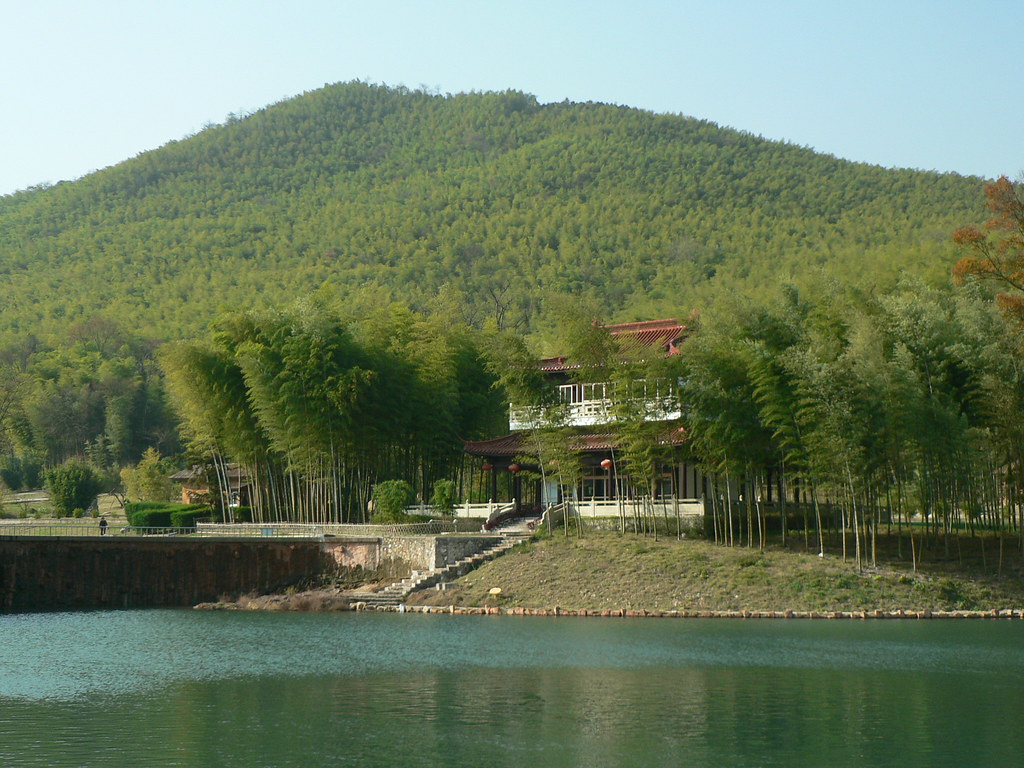
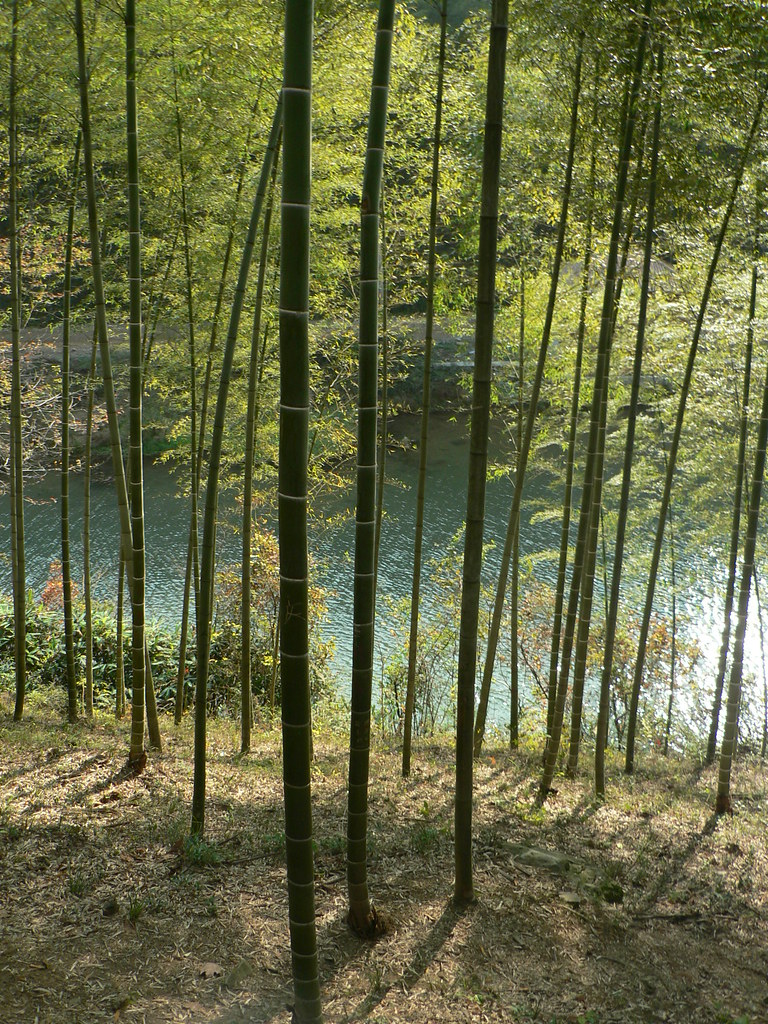
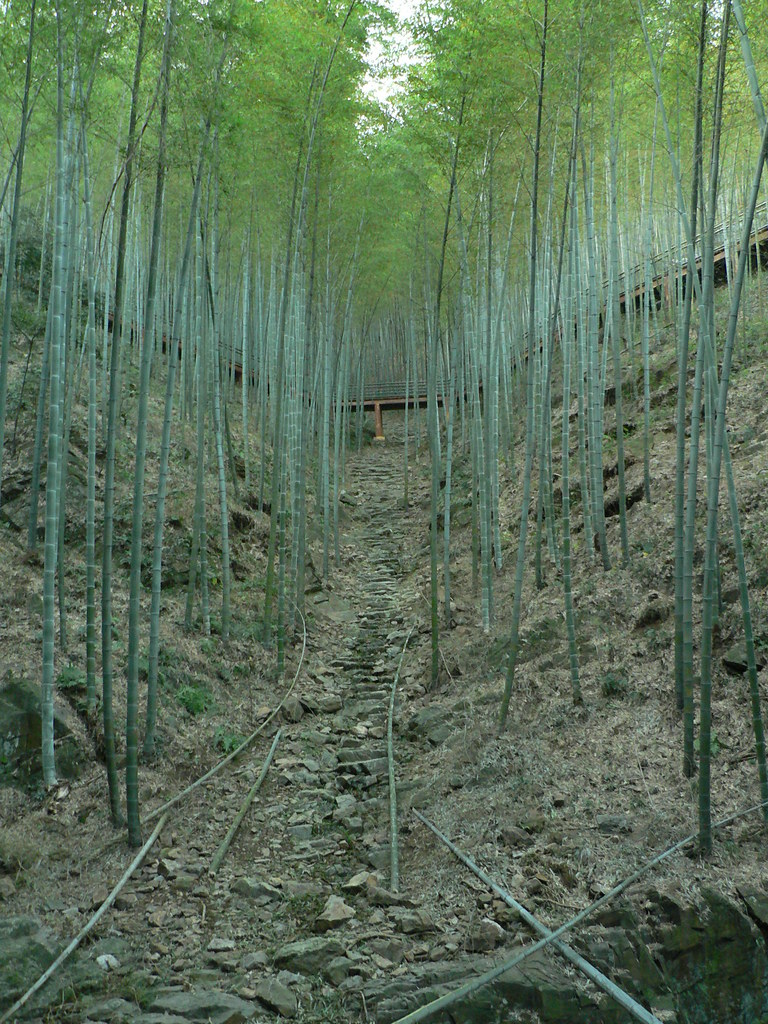
The Sea of Bamboo is a large natural forest of bamboo near the town of Yixing, Jiangsu. We visited it with a class from NUAA. It's a sight just like you'd expect from any cheesy brochures of China, or perhaps - more gratiatingly - high budget Chinese gong fu (kung fu) films; hordes of gently bowing white-ringed bamboo stalks, crowned with a handful of tiny spring green leaves, for as far and as deep as the eye can see. The Sea is tastefully accomodating to tourists, thanks to a plain wide path that leads through it, turning into stone steps or even a bamboo walkway at points.


The path in


Green bamboo

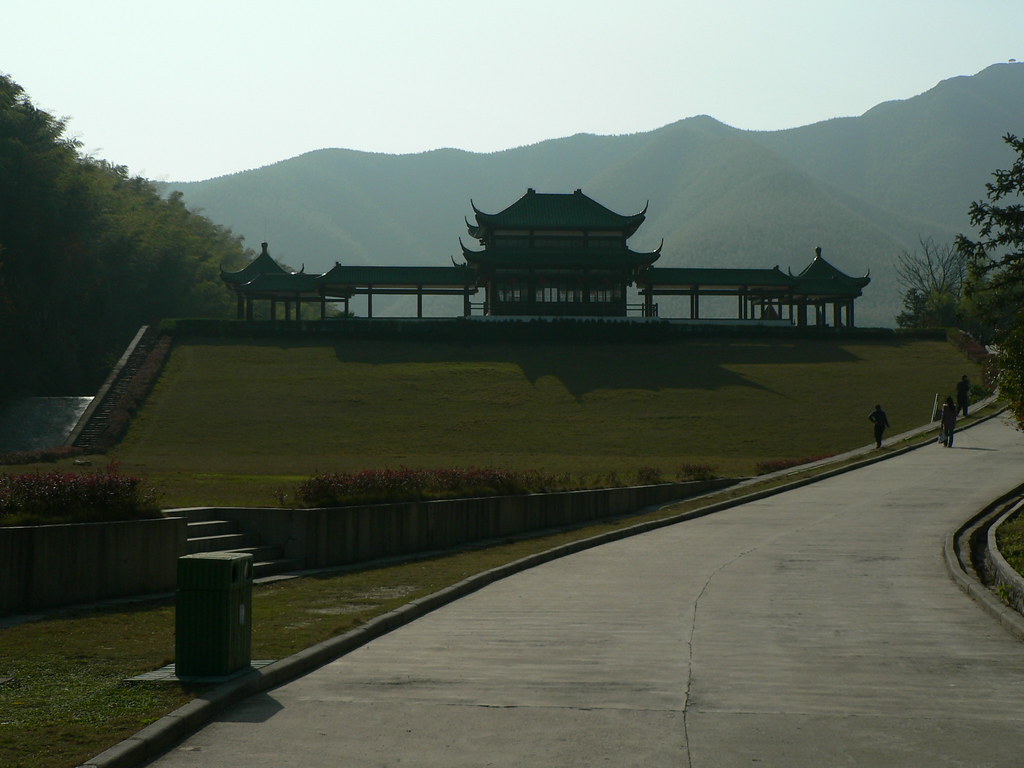
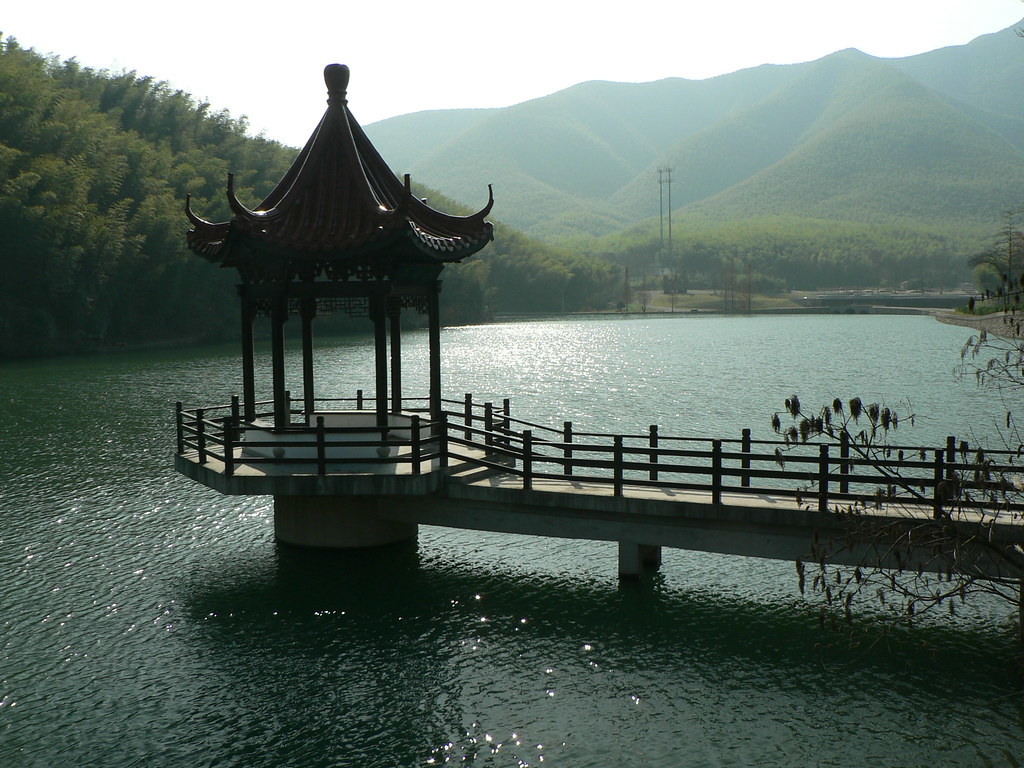
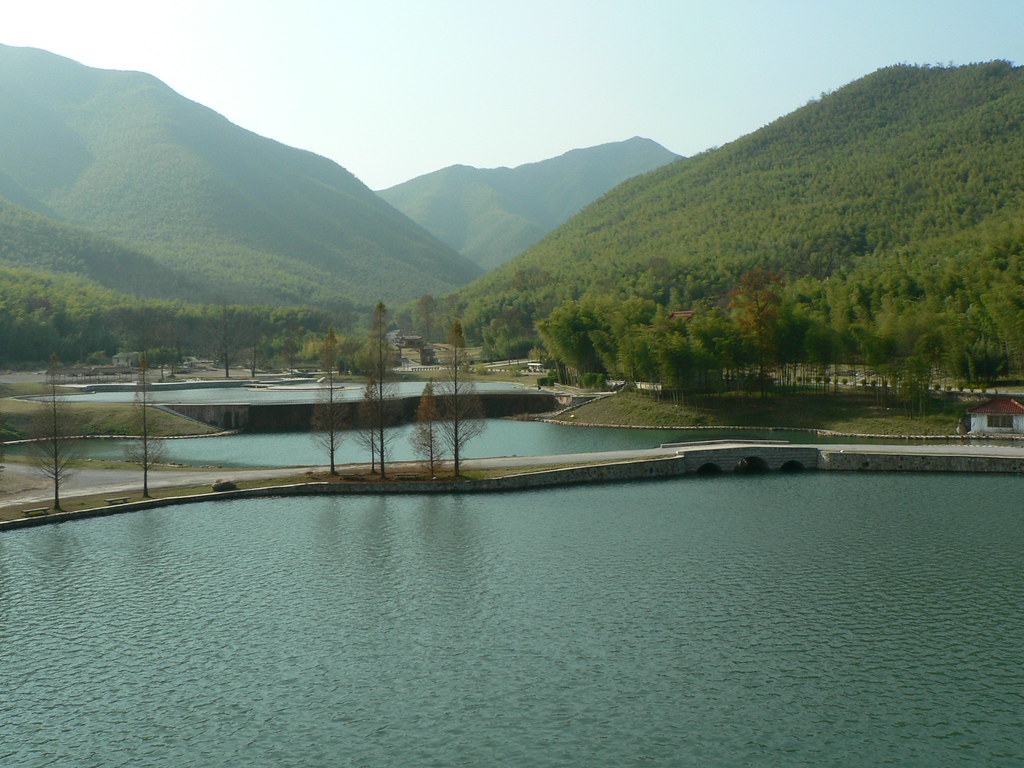
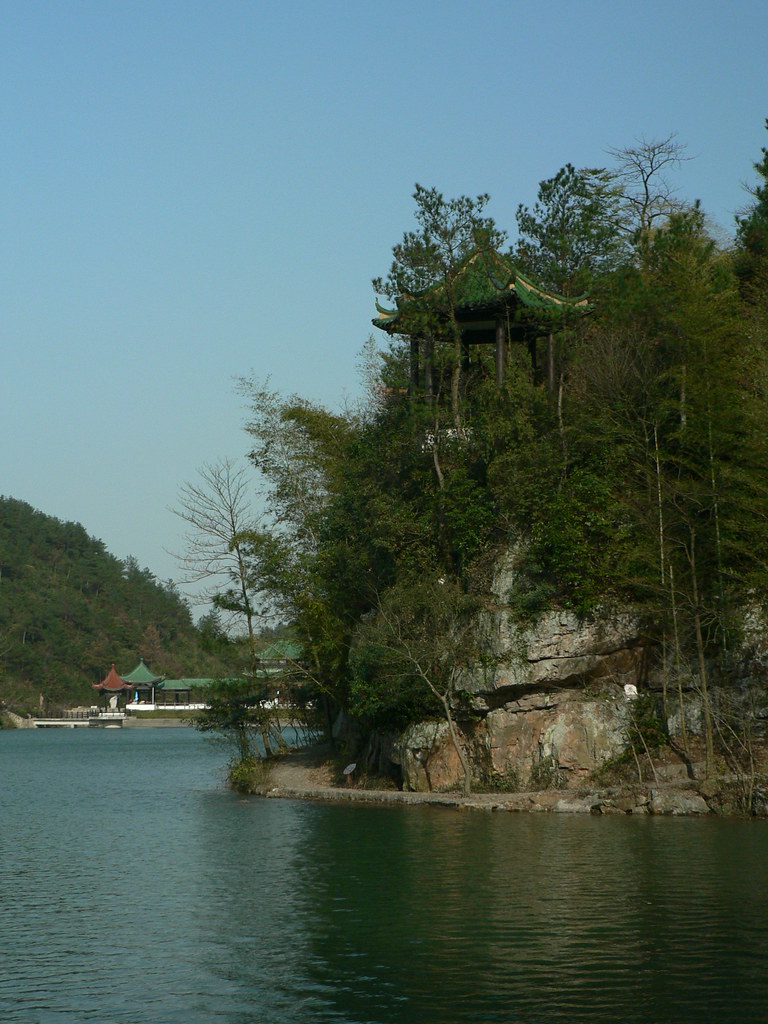
The first great sight along this path is a very traditional pavilion at the top of a small grassy slope. Backed by photogenic rolling mountains which have just enough mist to highlight their creases, it's the perfect prelude to the next sight - Mirror Lake. This area is well tended to, and very clean and calm. On the other side of the lake is a series of small lakes and dotted trees, which can be seen while walking round the long way. If you go the short way, there's a traditional pagoda to relax in. If you're adventurous enough to climb the hills around the lake, there's a cute viewing platform hidden in the trees, offering a panorma of the area, and perfect for a quick kiss.


Pavilion


Mirror Lake


Pagoda shrouded in bamboo


Higher parts of Mirror Lake


It's steep from the top!


Viewing platform

Further along, the path climbs upwards into the mountain, all the time surrounded by bamboo plants. People love to carve their names or some words into the trees, or even just draw in the powdery dust which accumulates on the trunks. This continual flow of vary shades of green is occasionally punctuated by an ancient temple, cave entrance, or stream. And also a children's playing park, which was good fun! It's around 7km from the entrance to the summit, depending on which route you take. The air here is extremely good, especially compared to urban stuff, and it's a very serene place.


Cave entrance


Mountain stream


Rough path up to the bamboo walkway

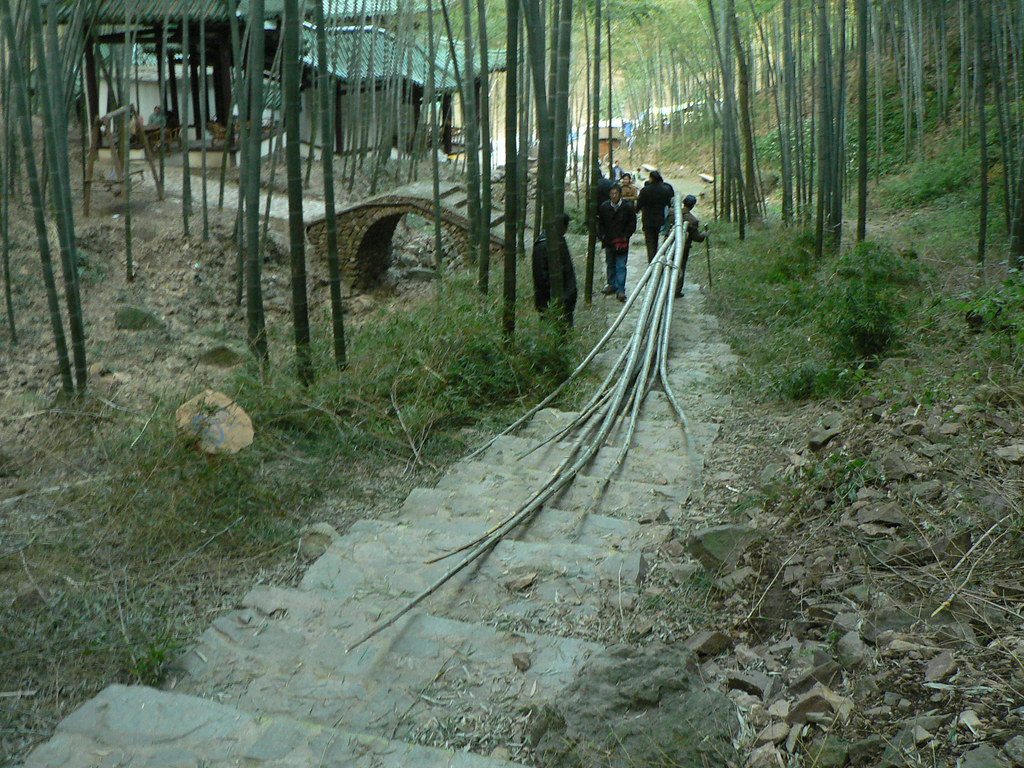
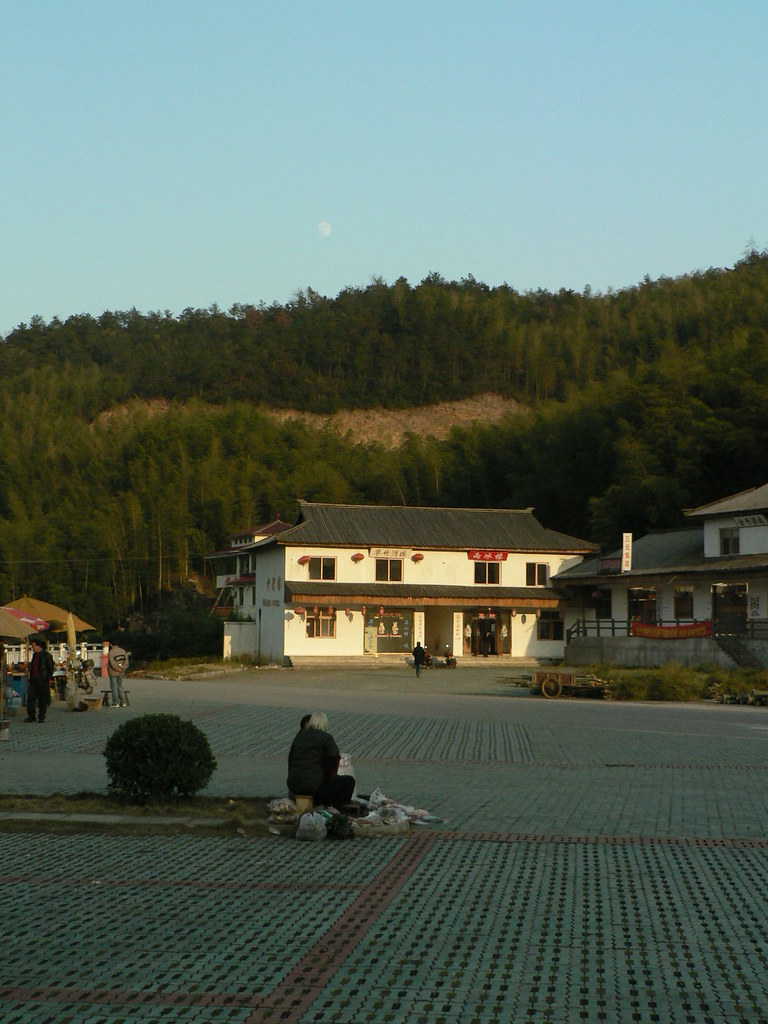
After a little while, we came to a resting place that was the base of the climb to the summit. The trail turned to steps here, and there were workers dragging trunks of harvested bamboo down the paths (perhaps to be used as scaffolding, who knows!). It was hard work, though the climb was worthwhile. We took the bamboo walkway down, and then hopped onto an electric tour bus to get to the front gate, so as not to miss our ride home. The moon had risen just as we were leaving, giving a glorious glow to the mountain at the end of the day.


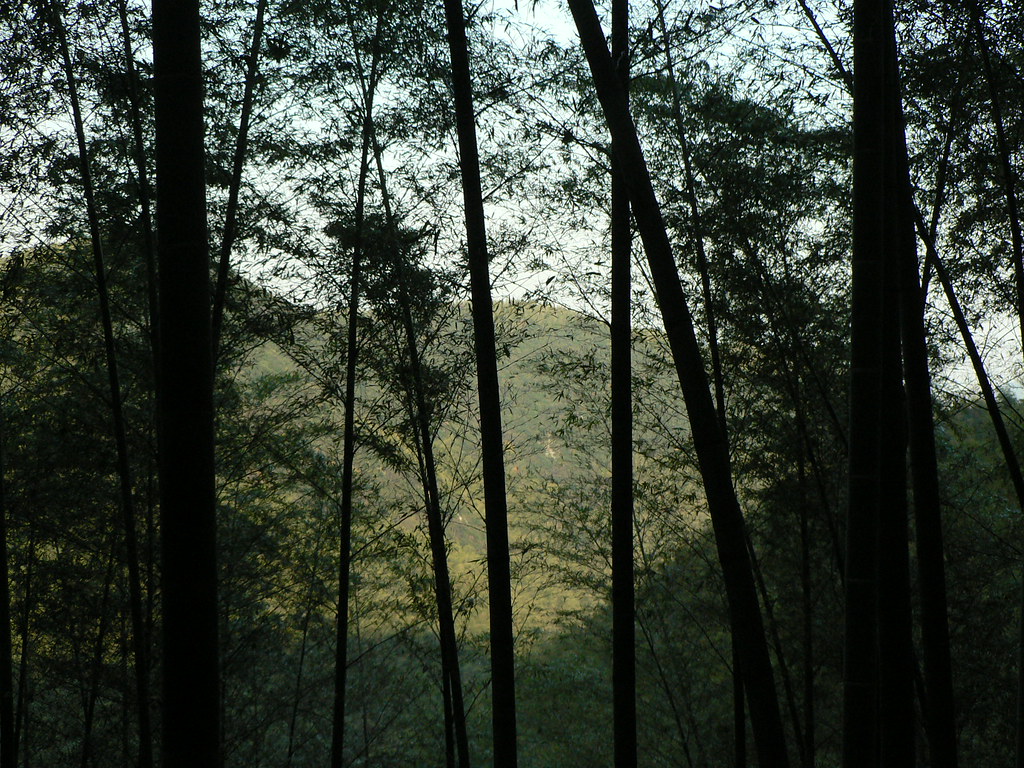
Bamboo fronds at sunset


Carrying trunks down the steps


View from high up


Thoroughly recommended!

Yixing

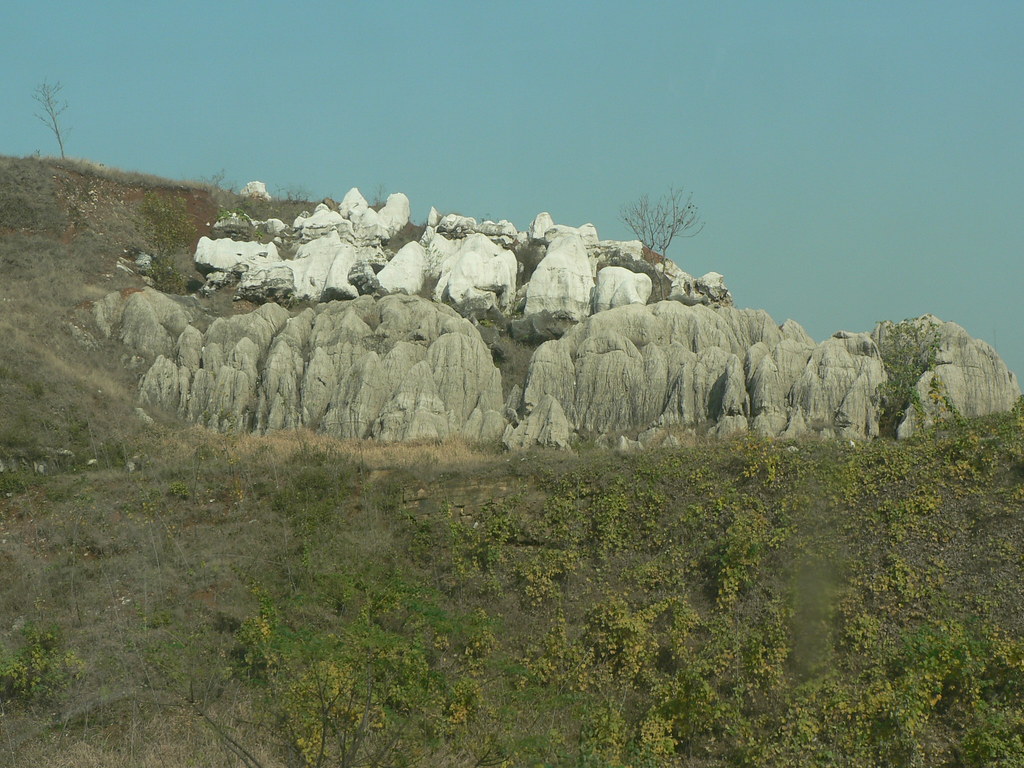
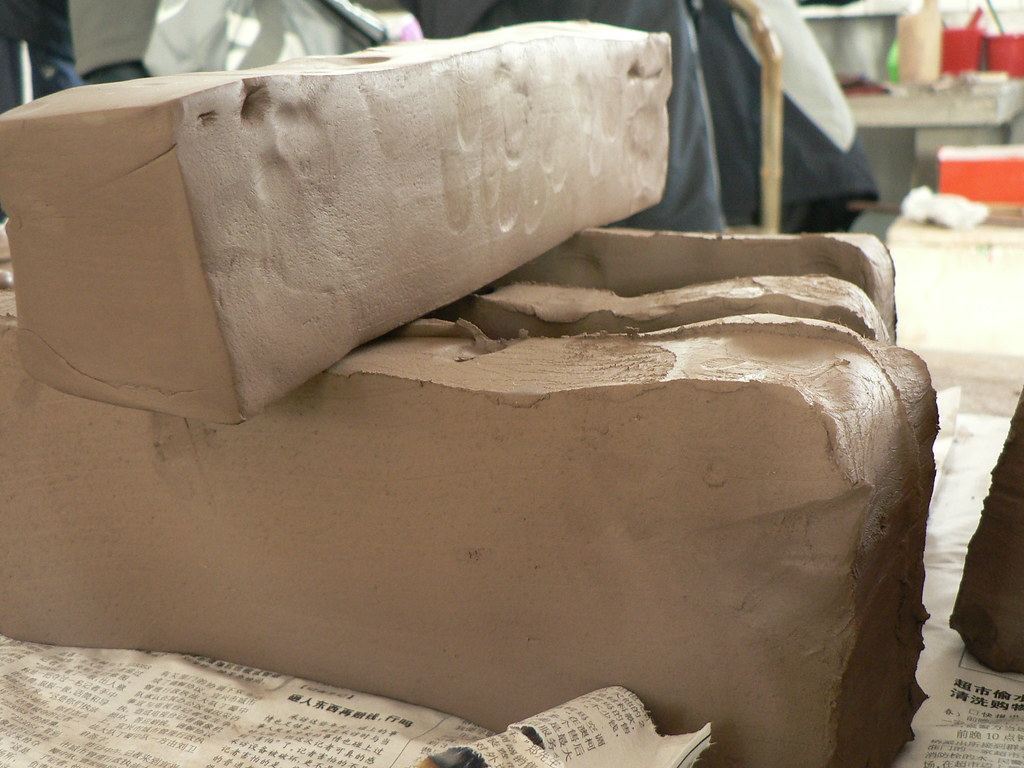
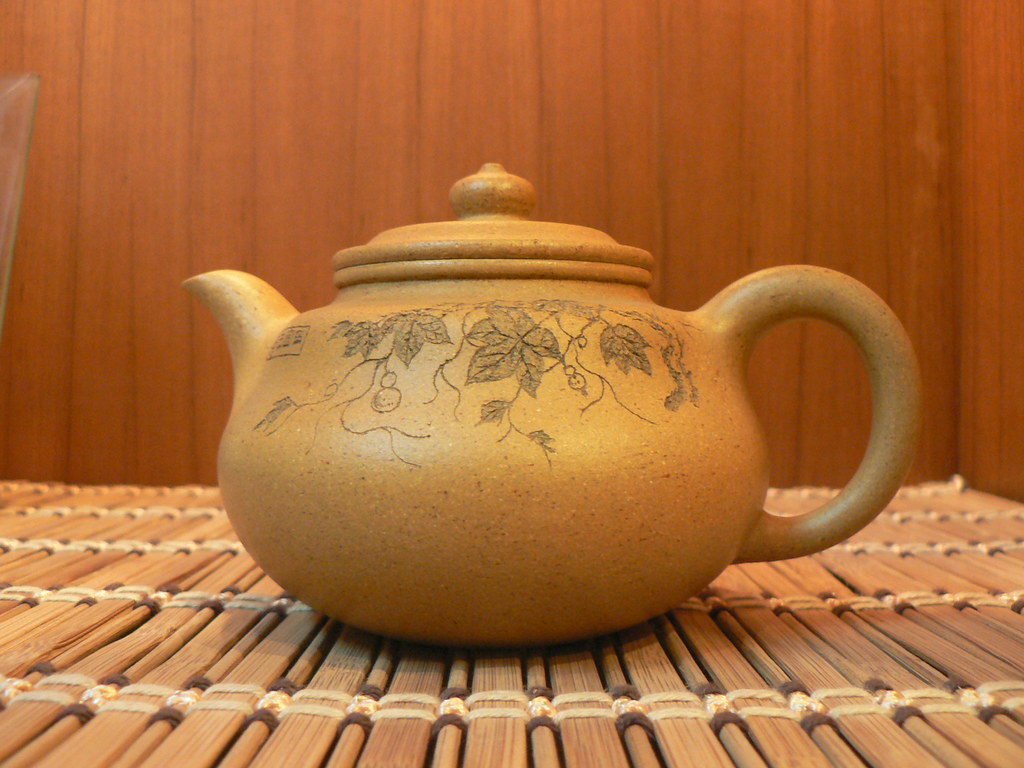
Yixing, in northern Jiangsu province, is known throughout China for its dark clay. Many local businesses revolve around manufacturing earthenware goods from Yixing's "purple sand", either via mass production or by hand. Often, Chinese artists who work with clay will build their pieces out of material from this region.


Yixing clay


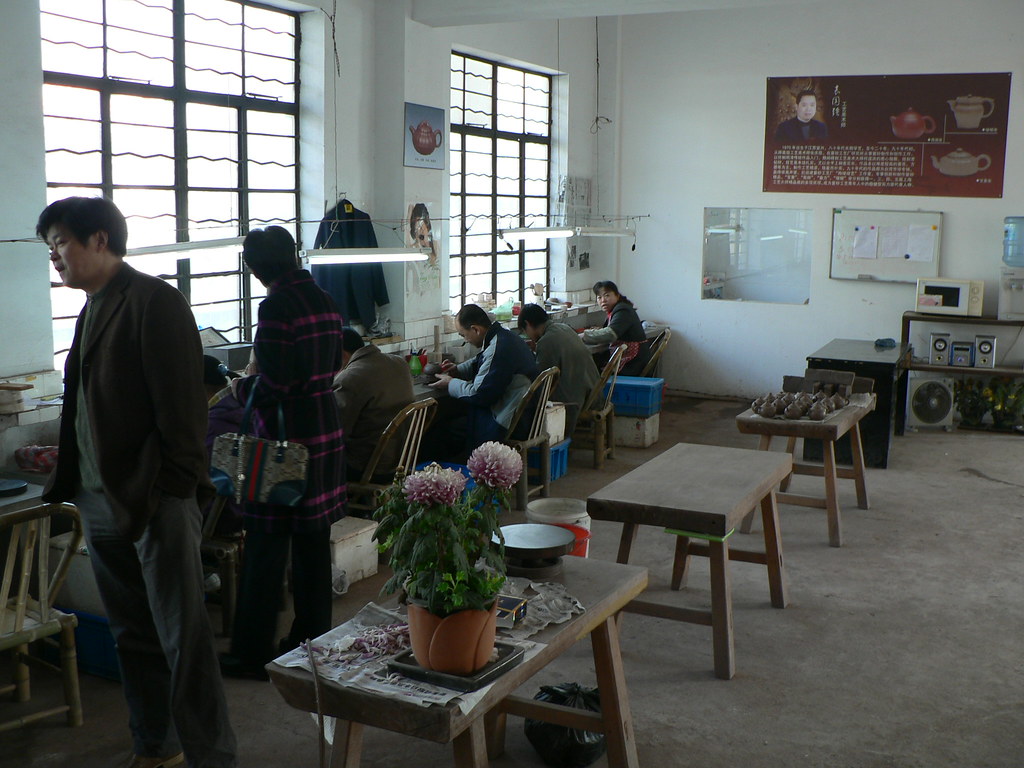
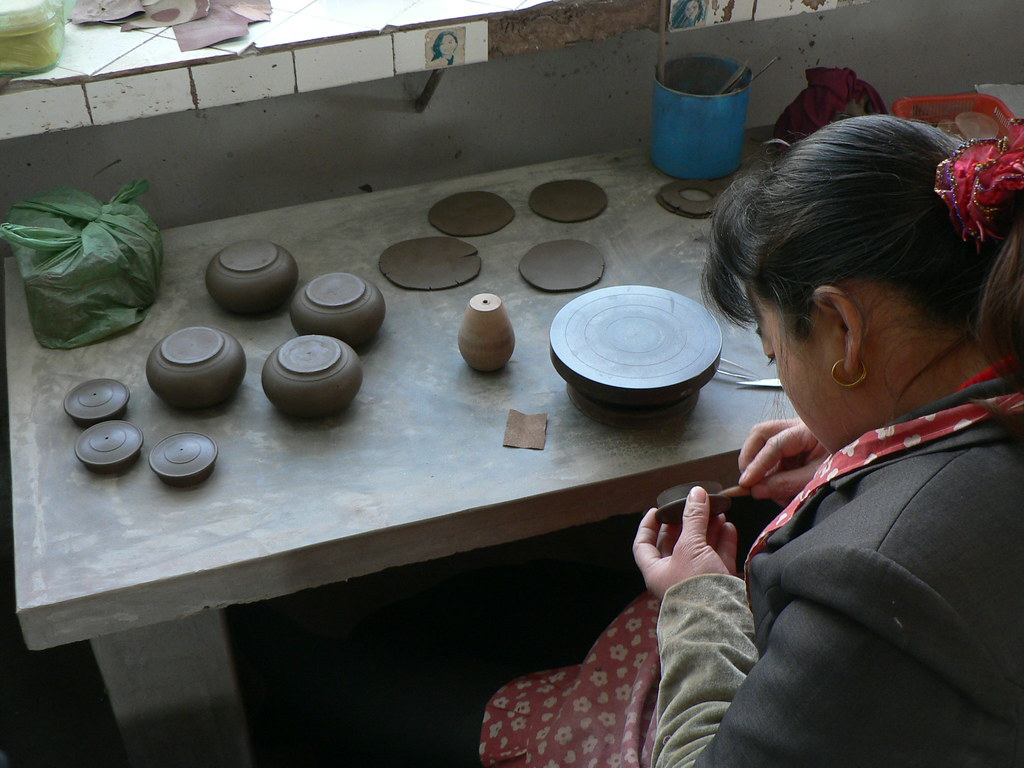
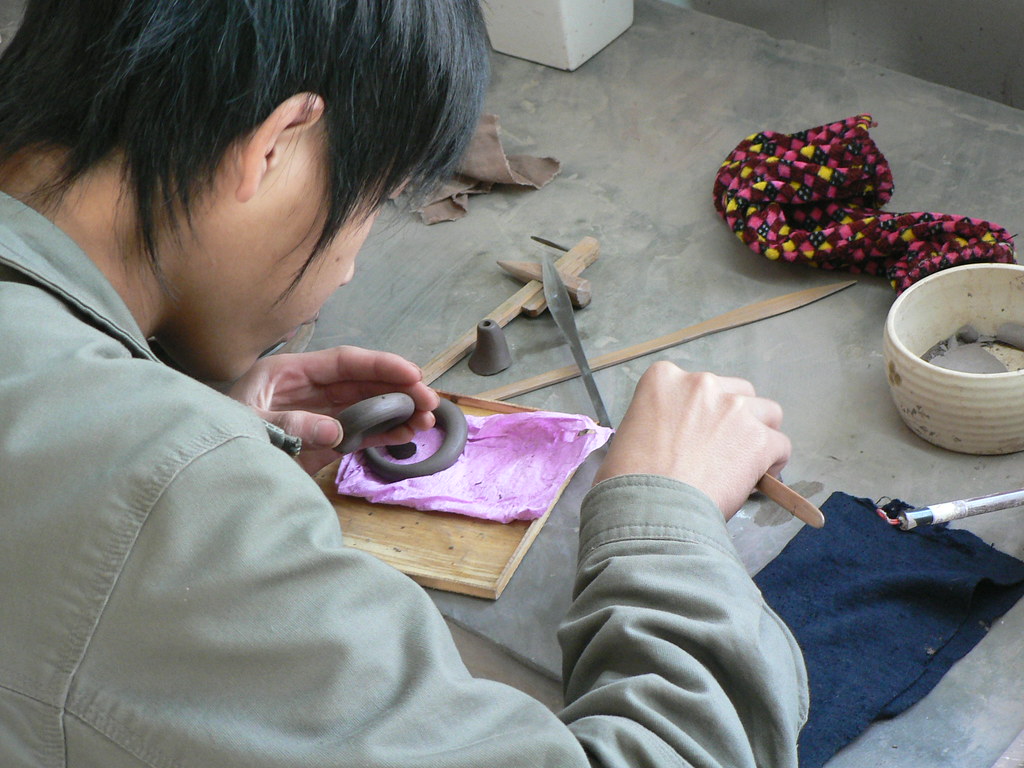
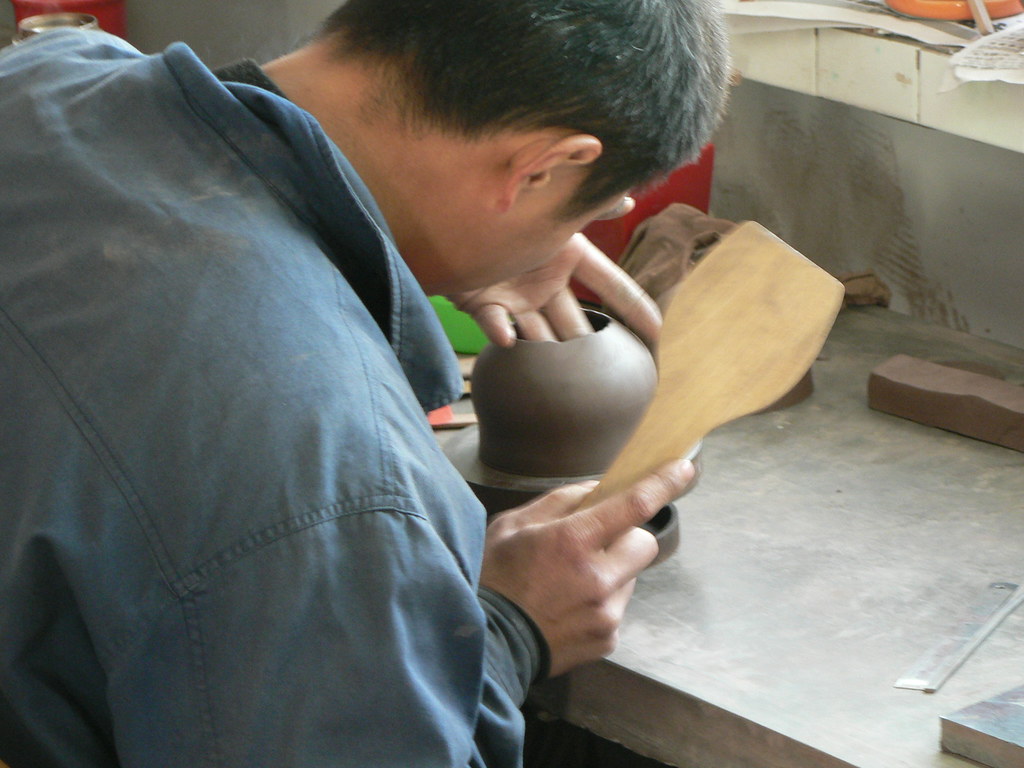
We visited a teapot factory in Yixing, where people meticulously put together very high quality hand-made clay teapots.


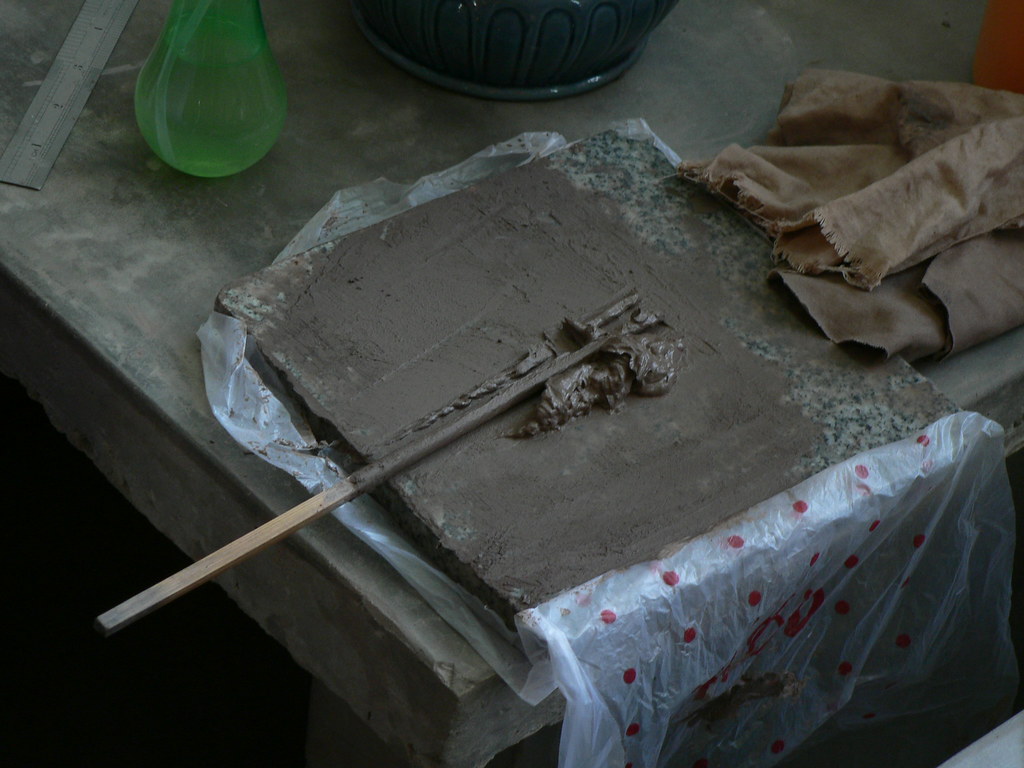
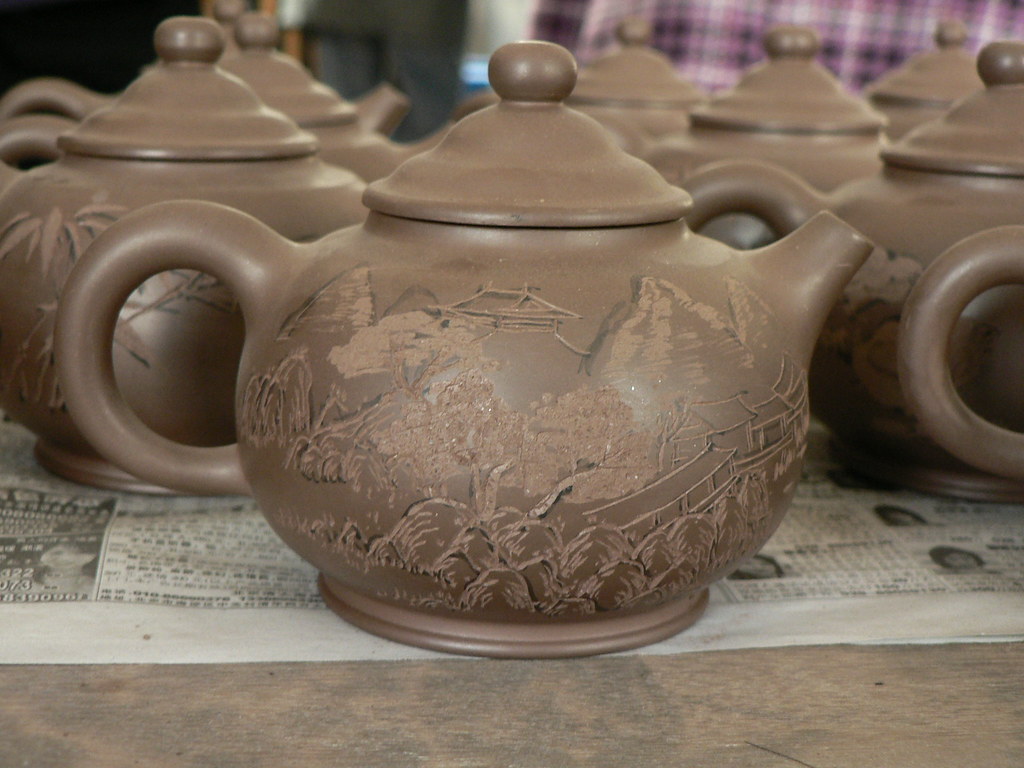
Each person will work on a different piece of the teapot - the spout, the handle, the base, the lid, and the main chamber. The work is very fine - despite making the walls of the teapot only 3 or 4 mm thick, the artisans manage to keep every part perfectly round and well formed. The end product looks as precise as a machine-built item could be, without manufacture marks.


Wet clay, ready to be smoothed in


Smoothing the teapot


Finishing the lid


Making the handle


Carving a spout


Thinning the chamber walls


The finished product

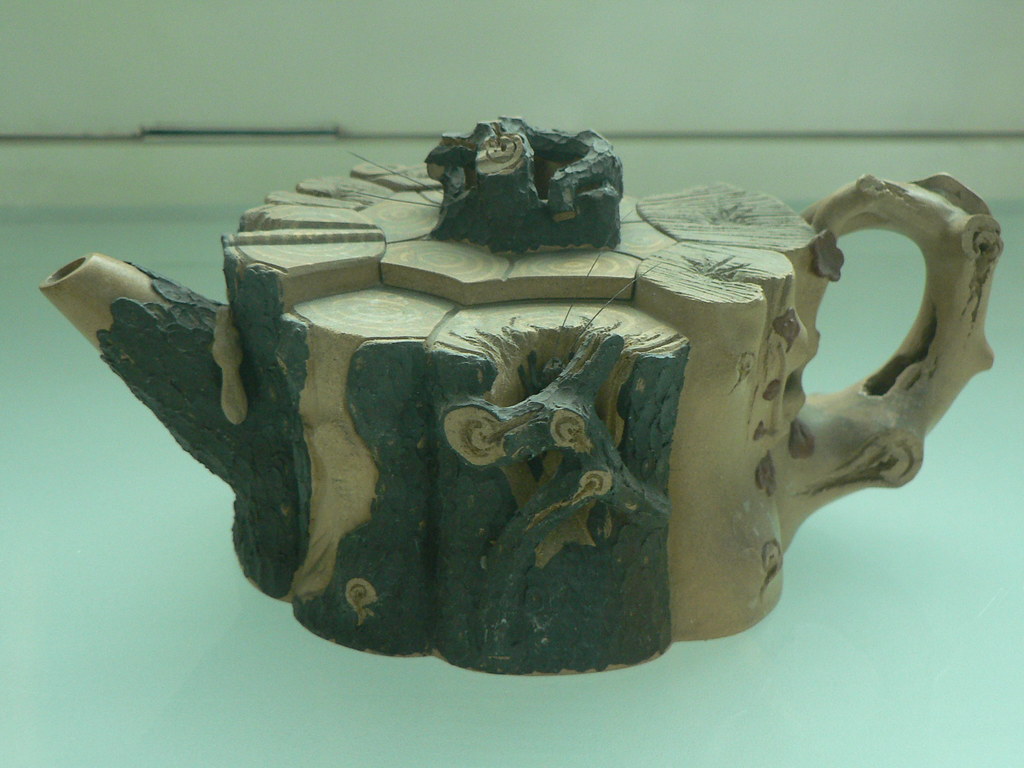
On the ground floor of the factory is a small museum of teapots and tea sets made with Yixing clay by famous arists. Many are worth over 1 million RMB; for comparison, that's 100 000 Euro for a well-crafted and simple teapot.


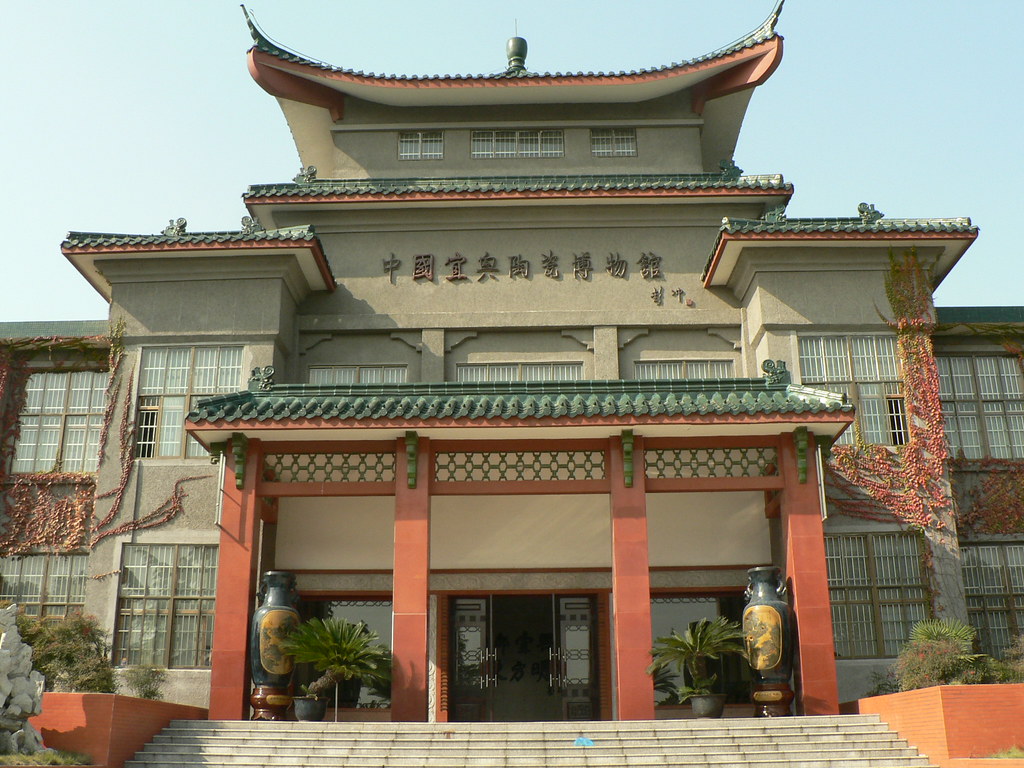
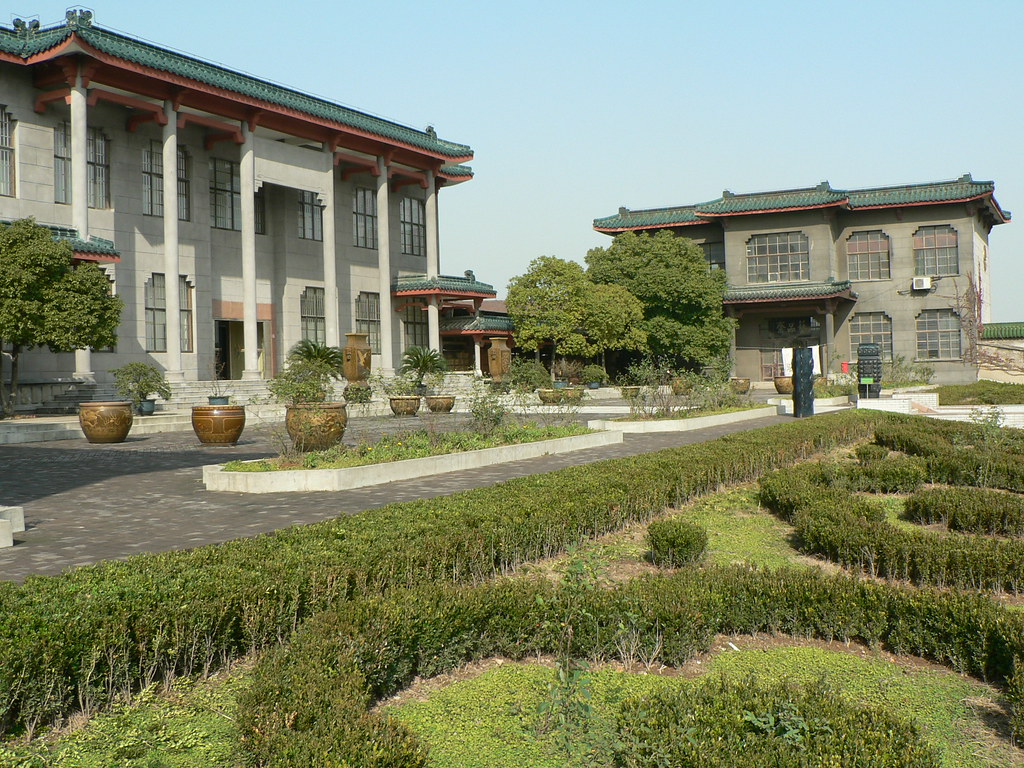
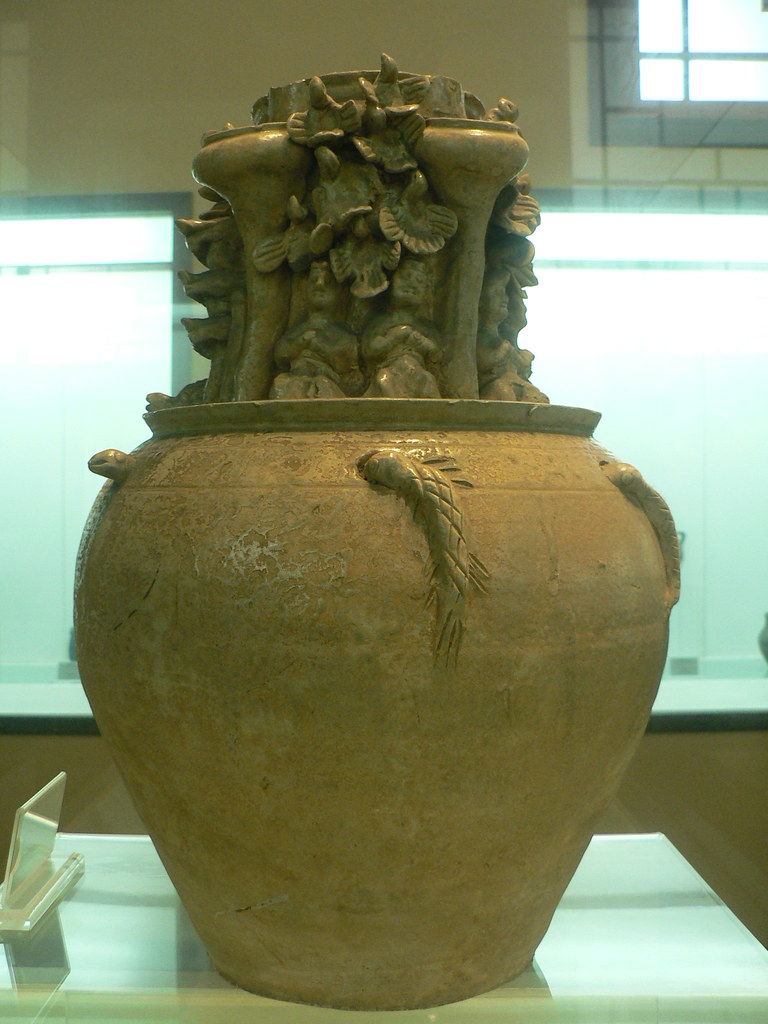
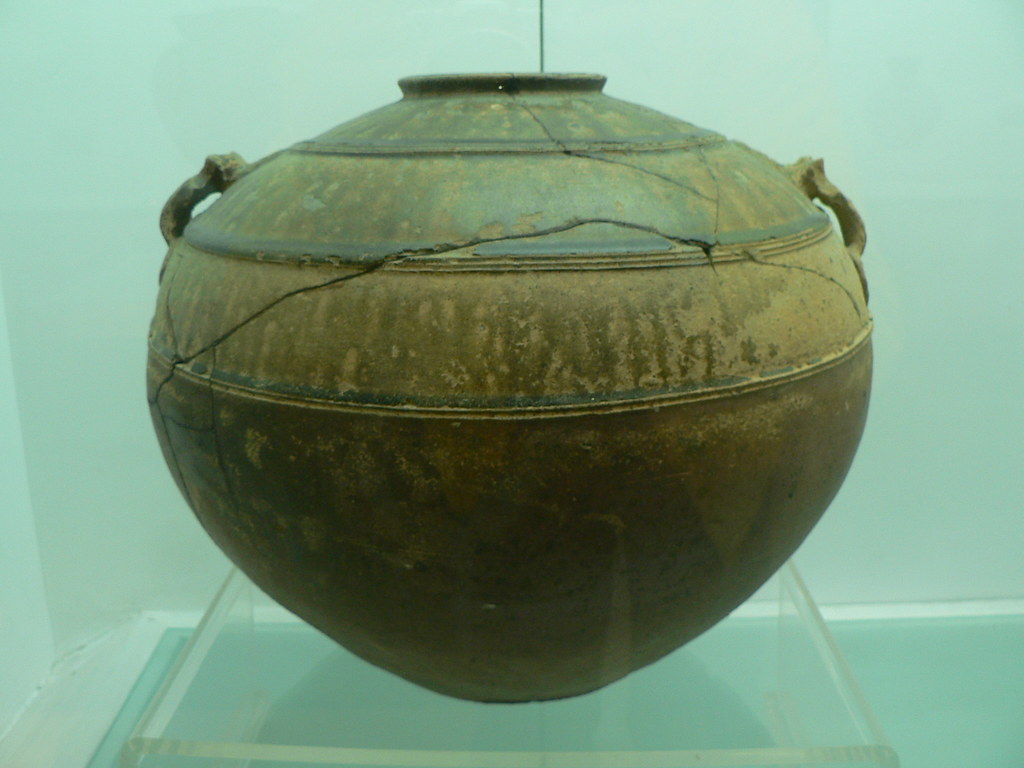
As well as a swelling pottery and glazing trade, there's a museum of pottery, containing a lot of ornate and interesting designs (mostly teapots!) in Yixing. There's some ancient pottery here, much older than most European countries, and also many beautiful exhibits of royal and modern earthware products.


Yixing pottery museum


There's a fantastic huge bowl of heavy clay made for Emperors of the Ming Dynasty, whose is coloured a beautiful deep ivory tone and textured like large scales, topped by a green rim, over which lies a translucent sea green glaze. The full name is something along the lines of "Lotus Flower Dragon's Head Bowl". Unfortunately no photos were allowed here!
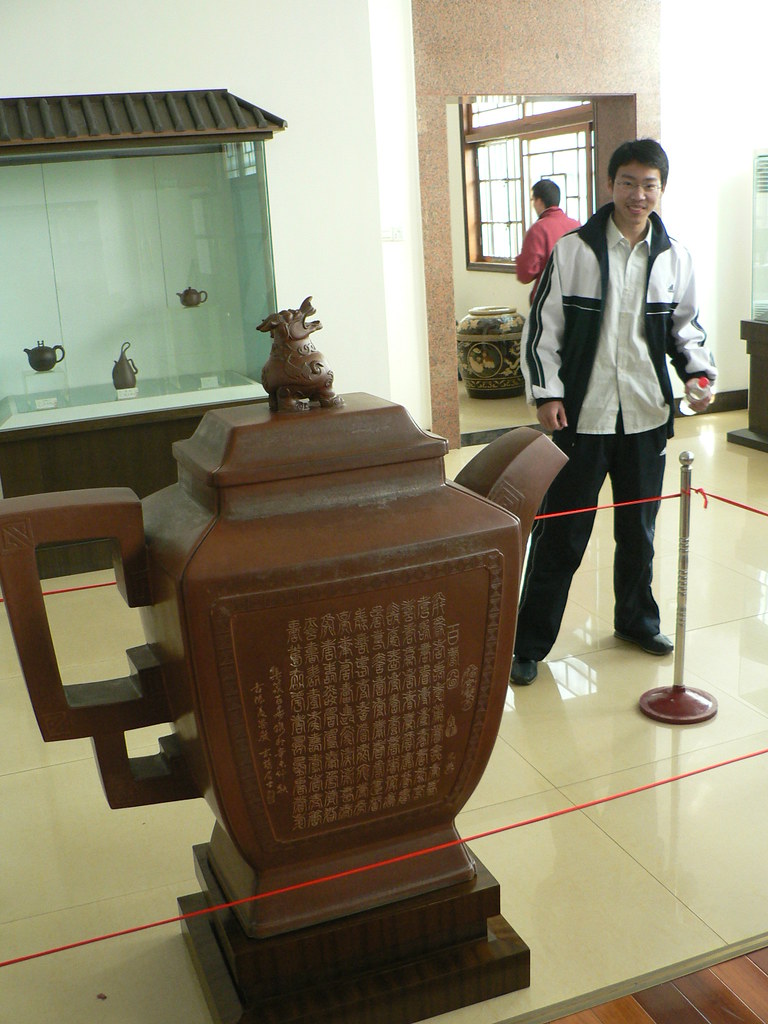

Around 200 years old


2000-3000 years old


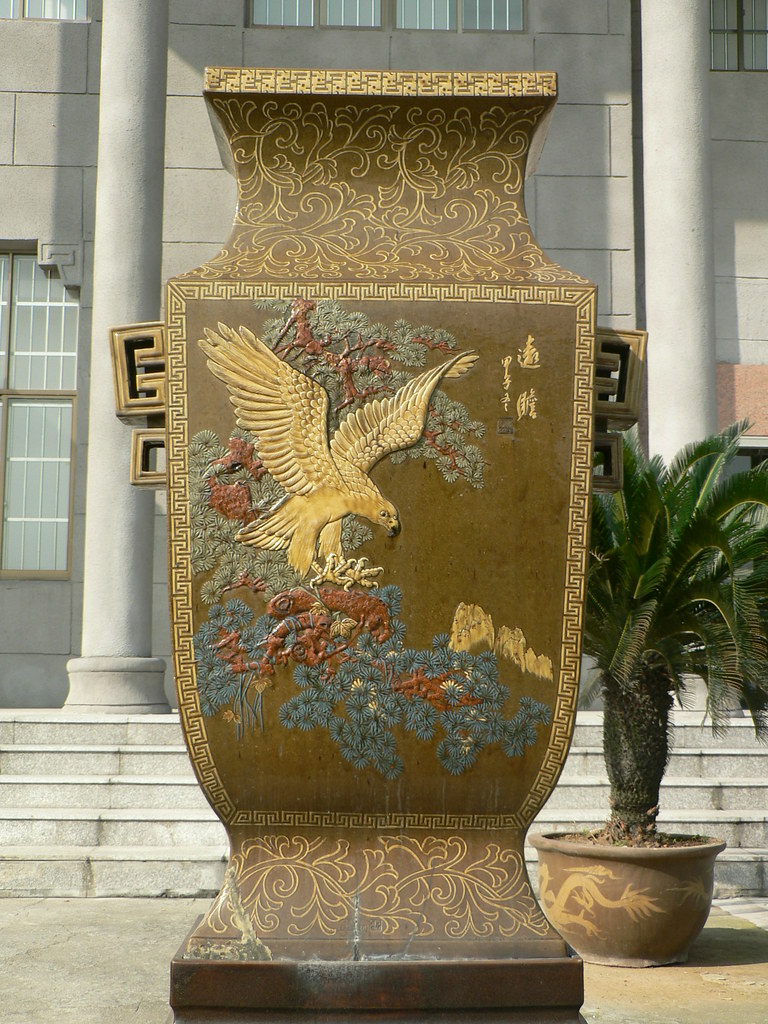
Relatively modern, and huge (~2m)

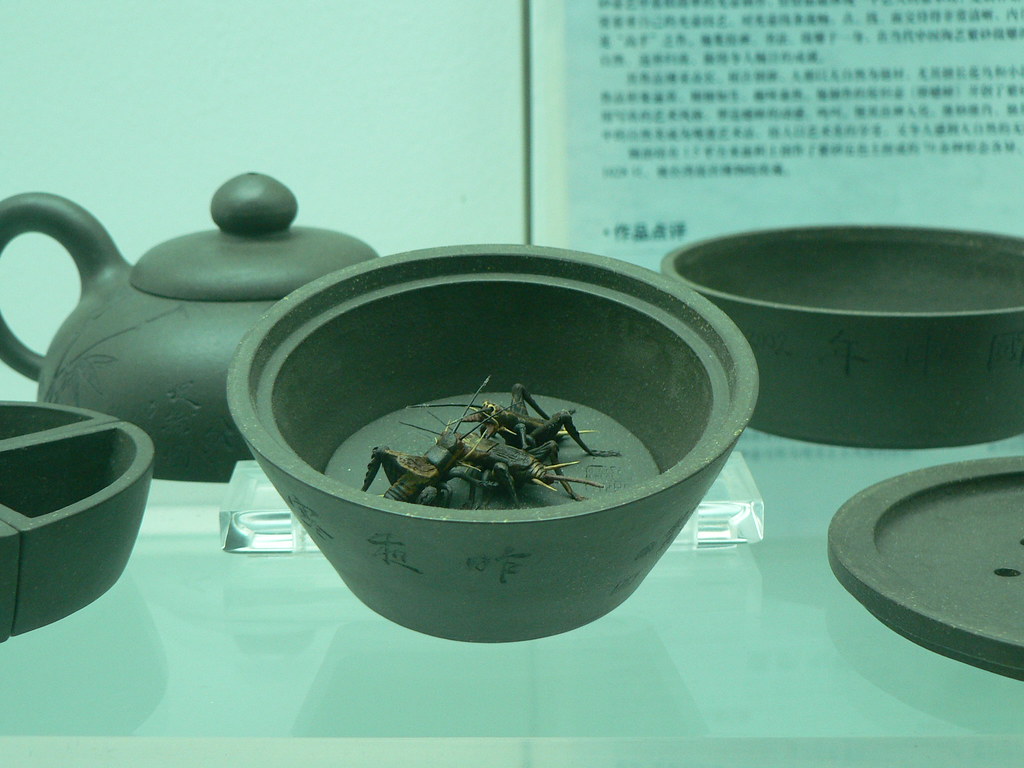
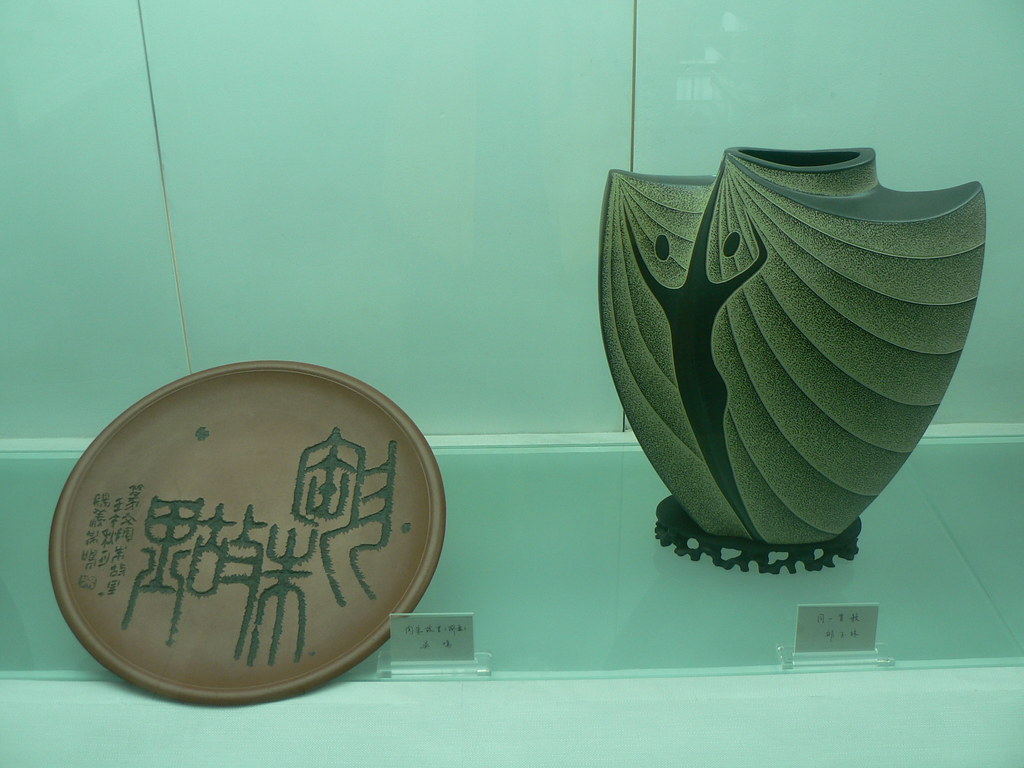
One very popular adornment to the teapots and the like we saw in Yixing is the inclusion of an old fighting beetle. I'm not sure of its English name. Men would place bets on their beetles, and whoever's beetle survived the fight would collect all the cash. There were also some very non-traditional looking pieces here, that could easily pass in any modern collection worldwide.


Yixing is also well known for its black rice. It's sticky, like most Chinese rice (imagine picking up grains of dry rice with chopsticks after a hard day's work!), and served with sugar. It's really delicious and goes well with most food. The tangy juices left by any even vaguely spicy dishes can be mopped up with sweetened black rice to make a very enjoyable mouthful! Around 4-7RMB for a 250g bag.

It's easy to collect pieces of purple clay Yixing pottery from any of the local dealers that crowd town; expect to pay about half the inital price offered. A 15cm long plain teapot goes for about 20-35RMB, with prices going up alongside size, as you'd expect!

If you're interested, you can pick up some genuine Yixing clay:
Antique Yixing teapots for sale
Cheap Yixing teapots